

Adoption of App-Controlled Outdoor Lighting Accelerates as Smart-Home Standards Consolidate, Festive Lights Reports
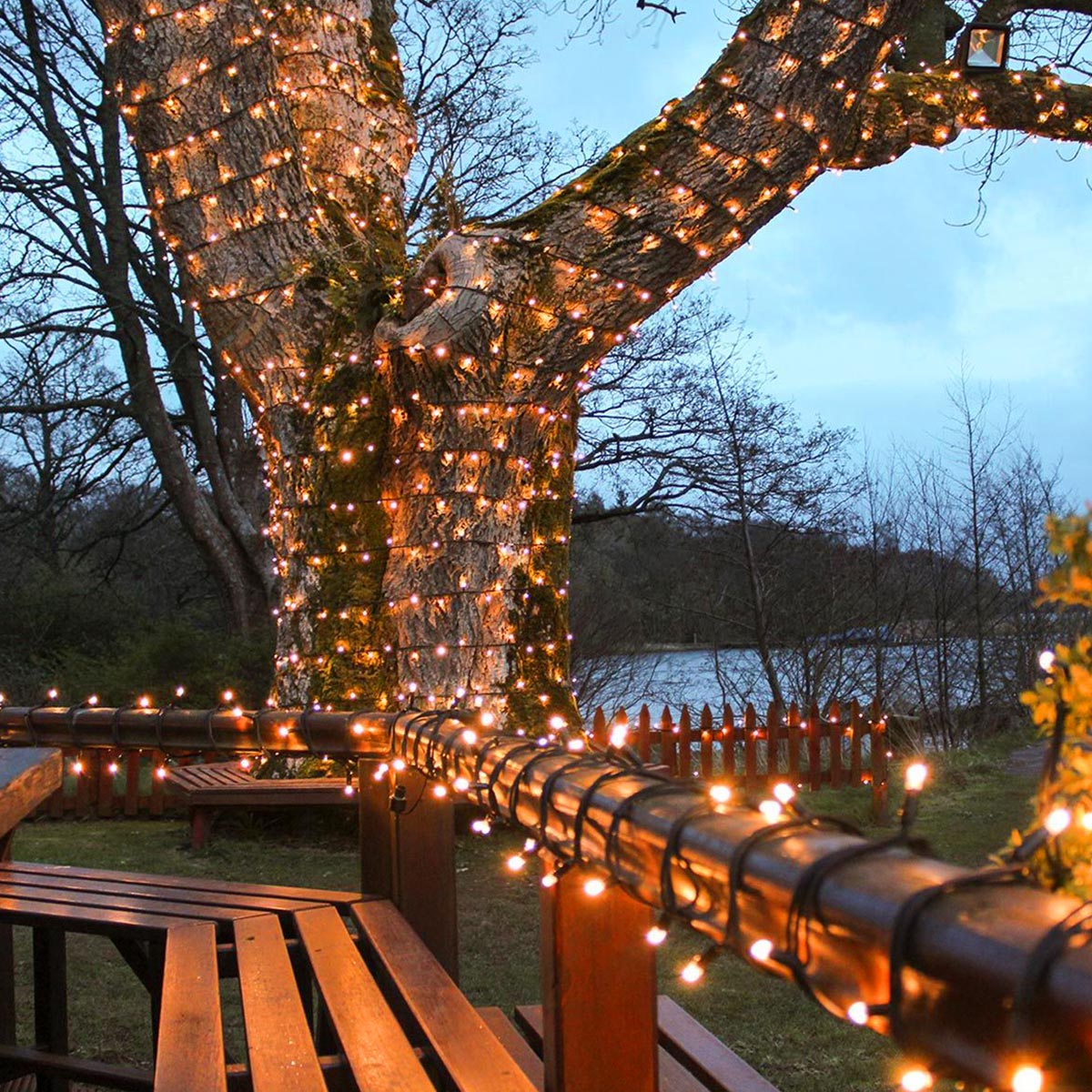
ConnectPro New Vintage Warm White Colour
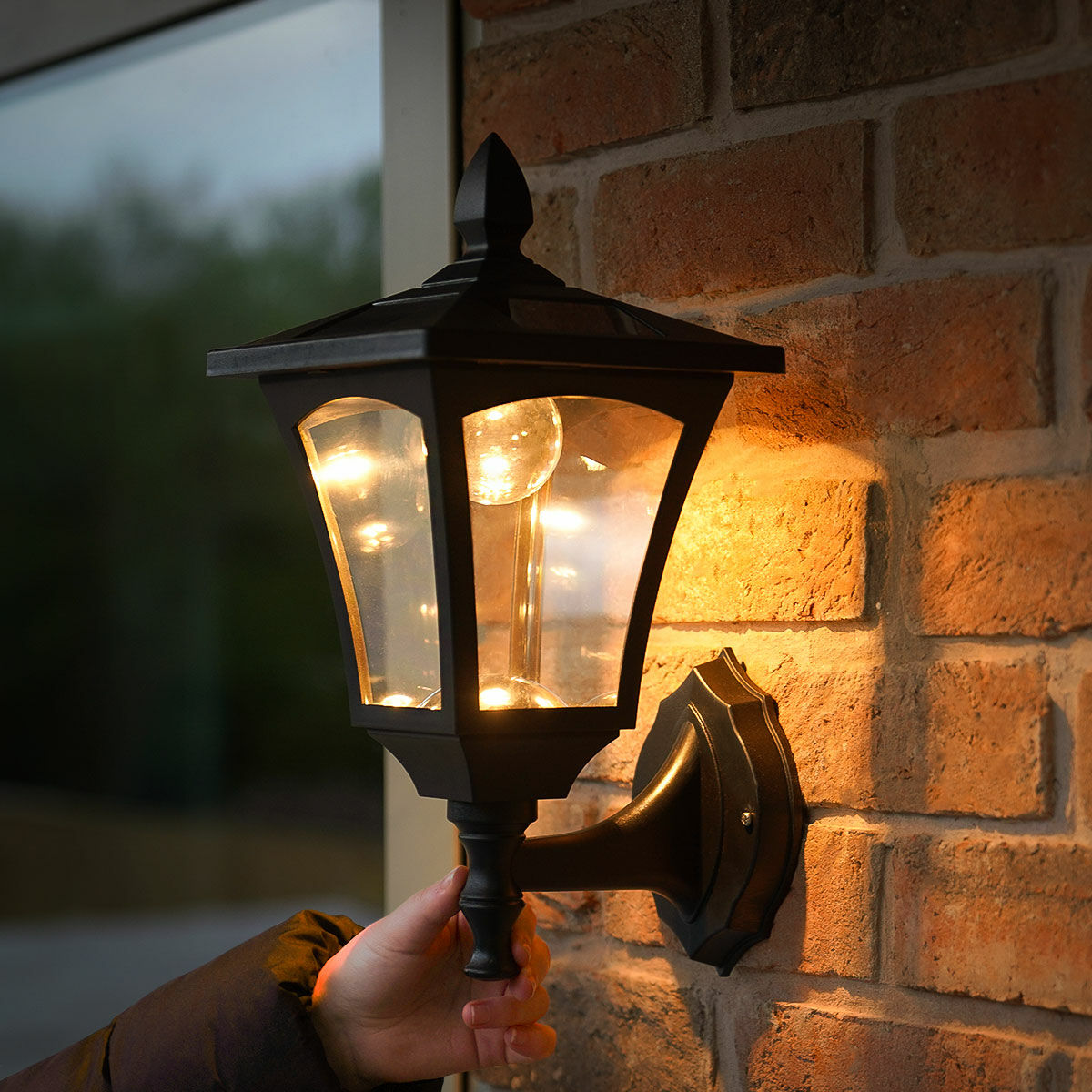
Wall-mounted outdoor lantern glowing on a brick house exterior at dusk.
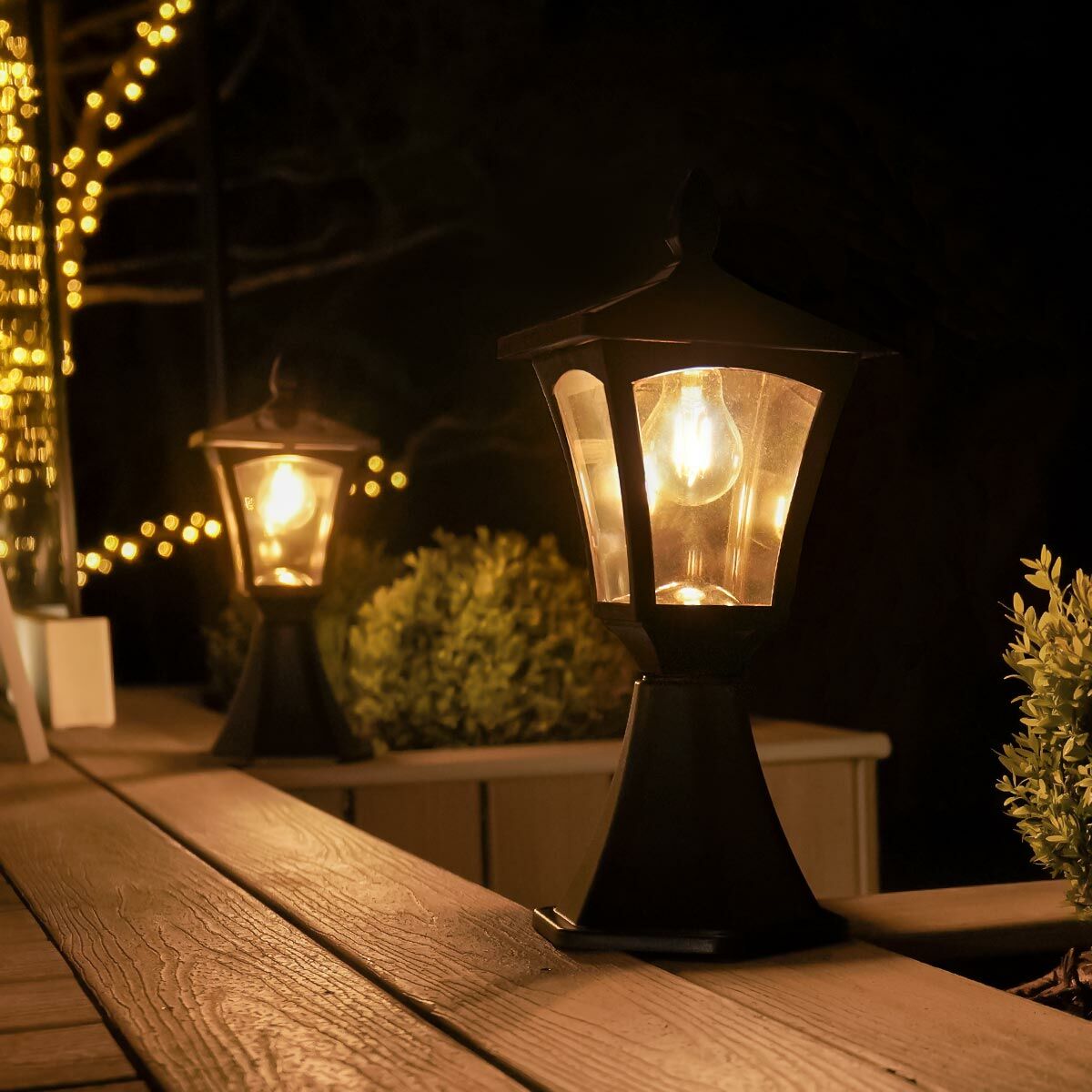
Solar garden lights illuminating wooden deck at night
An overview from the UK lighting supplier examines how apps and low-power mesh networking are changing the way residential exterior lighting is operated.
CHORLEY, CHARNAROCK RICHARD, UNITED KINGDOM, August 7, 2026 /EINPresswire.com/ -- Festive Lights, a United Kingdom-based supplier of domestic and commercial decorative lighting, has released an overview of the technical and market developments behind the growing adoption of app-controlled and networked outdoor lighting. The assessment examines the transition from mechanical timers and dusk-to-dawn photocells towards systems managed by smartphone applications and wireless mesh networks, and considers how the recent consolidation of smart-home interoperability standards is affecting the way households specify, install and operate exterior illumination.The review is directed at a residential market in which connected lighting has moved from an enthusiast product to a mainstream category. According to industry research, the global smart lighting market was valued at more than 27 billion US dollars in 2026 and is forecast to grow at an annual rate approaching 20 percent over the remainder of the decade. Within that total, analysts identify the outdoor application segment as the fastest-growing, driven by falling hardware costs, wider availability of wireless control, and the extension of home-automation habits from interior rooms into gardens, patios and boundaries.
From Timers and Photocells to Application Control
For much of the past two decades, automation of decorative and functional outdoor lighting was limited to two mechanisms. Mechanical or digital plug-in timers switched circuits on and off at fixed clock settings, while photocells, also described as dusk-to-dawn sensors, activated fixtures when ambient light fell below a set threshold. Both methods remain in wide use and continue to serve basic requirements. Neither, however, allows adjustment without physical access to the device, and neither provides feedback on the status of an installation.
The introduction of consumer-grade wireless control has changed the baseline. Contemporary systems are configured and operated through a smartphone or tablet application, which allows scheduling, dimming, colour adjustment and grouping to be managed remotely. The same applications typically report the connection status of individual fixtures and, in battery and solar products, the remaining charge. Festive Lights already stocks app-controlled decorative lighting within this category, including the Twinkly range, whose current controller combines Bluetooth and Wi-Fi connectivity with application-based dimming, scheduling, timer functions, music synchronisation and compatibility with voice assistants, at an IP44 rating suitable for both indoor and sheltered outdoor use.
"The change is less about novelty and more about how a system is managed after installation," said Stephen Alty, General Manager at Festive Lights. "A timer sets a fixed pattern that has to be reset by hand whenever daylight hours shift or a household's routine changes. An application-controlled system can be adjusted from a phone in a few seconds, and it reports back on whether each part of the installation is connected and, where relevant, how much charge remains. For an outdoor scheme spread across a garden, that visibility is the practical difference."
Wireless Standards and the Consolidation of a Fragmented Market
The most significant recent development affecting connected lighting is not a single product but the maturing of the standards that allow devices from different manufacturers to work together. For several years, the sector was characterised by competing and largely incompatible ecosystems, which required separate applications and dedicated hubs and frequently prevented products from different brands from operating on a single network.
That fragmentation has narrowed with the wider adoption of Matter, an interoperability standard maintained by the Connectivity Standards Alliance, the industry body responsible for the earlier Zigbee protocol. Matter is an application-layer standard rather than a wireless signal: it defines a common language that devices use to identify themselves and communicate, and it operates over existing network technologies, principally Wi-Fi and a low-power mesh protocol named Thread. The specification has advanced through successive revisions, with version 1.6 released in mid-2026, and the number of certified products has expanded substantially, with industry commentary citing more than one thousand Matter-certified devices and a comparable number of Thread-certified devices available by 2026, a marked increase on the position two years earlier.
Thread is of particular relevance to outdoor installations. It forms a self-healing wireless mesh in which each mains-powered device can relay signals for others, extending coverage across a property as further units are added rather than depending on a single connection to a domestic router. Bluetooth, by contrast, retains a longer track record in lighting specifically and remains the dominant connectivity method in many decorative products, including for the initial setup of Matter devices. The three principal smart-home ecosystems, operated by Amazon, Apple and Google, now support the shared standards, alongside other major platforms.
"For anyone lighting an area larger than a single room, coverage has always been the constraint," said Jana Dalton, a specialist in exterior lighting at Festive Lights. "A mesh network addresses that directly, because each fixture can pass a signal to the next, so range improves as the installation grows rather than weakening at the edges. That characteristic suits gardens, where the distance from the house to a boundary or a remote seating area is often where earlier wireless products struggled."
Practical Capabilities and Everyday Use
The functional distinction between connected and conventional outdoor lighting lies in the range of adjustments available after installation. Application-controlled systems allow lighting to be divided into zones that can be operated independently, so that a dining area, a path and a boundary can each follow separate schedules or brightness levels. Dimming curves can be set to reduce output late in the evening, and scheduling can be linked to sunset times that update automatically through the year, removing the need to reset a fixed timer as daylight hours change.
Monitoring functions form a further point of difference. Because each fixture reports its connection status, a fault or a disconnected section can be identified without a physical inspection of the whole installation. In solar and battery products, charge reporting allows a household to anticipate when output may decline during extended overcast periods. These capabilities extend the automation already familiar from photocells, which continue to be incorporated into many connected fixtures to govern activation at dusk without manual intervention.
The same features carry implications for energy use. Scheduling and dimming allow lighting to operate only when required and at the minimum necessary output, which reduces consumption relative to fixtures left on a fixed high setting. This aligns with a broader regulatory environment: within the European Union, a prohibition on most mercury-containing lamps took effect at the end of 2025, a measure that analysts have cited as an additional driver of the transition to LED and connected lighting.
Outdoor-Specific Requirements: Weatherproofing and Power
The requirements that apply to conventional exterior lighting apply equally to connected systems. Controllers, connectors and fixtures installed outdoors remain subject to moisture, temperature variation, ultraviolet exposure and wind, and the reliability of a networked installation depends on the same environmental protections as any other outdoor equipment. Ingress Protection (IP) ratings continue to define the level of sealing against dust and water, with IP44 generally regarded as a minimum for sheltered outdoor use and higher ratings such as IP65 specified for continuous exposure.
Power arrangements introduce a further consideration specific to connected outdoor lighting. Devices that rely on a continuous mains connection to maintain network communication are constrained by the availability of external sockets, whereas battery and solar products can be positioned more freely but depend on stored charge to remain both illuminated and connected. Manufacturers have addressed this through higher-capacity lithium cells and more efficient photovoltaic panels, though output in winter and during prolonged overcast conditions remains a limiting factor that households are advised to account for at the planning stage.
"Connectivity does not remove the basic requirements of an outdoor product," Dalton said. "A controller still has to be sealed against water, cabling still has to be rated for exterior use, and a solar unit still depends on the charge it can gather in a British winter. The technology adds control and monitoring, but the durability standards that determine whether an installation survives the season are unchanged."
Interoperability Gaps and Consumer Considerations
The overview also addresses the limitations that persist despite the progress in standards, an area in which industry commentary has cautioned against overstating the current position. Support for shared standards remains inconsistent across brands, and a product's inclusion of a feature in a published specification does not guarantee that the feature is available in every retail device or exposed within every ecosystem application. Households running more than one control platform can inadvertently create separate, isolated mesh networks that do not communicate, a common source of connection difficulty that the standards bodies have moved to address in more recent revisions.
For consumers, these gaps translate into practical checks rather than obstacles. Analysts advise verifying that a product carries the specific certification claimed, confirming which ecosystems it supports, and establishing whether a separate hub or border router is required before purchase. The reliability of the domestic network on which a system depends is a further factor, particularly for outdoor installations positioned at a distance from a router.
Security and privacy considerations accompany any connected device. Networked lighting communicates over a household's wireless infrastructure and, in some configurations, with external servers, which introduces the general data-protection and account-security considerations common to smart-home products. The standards developed for the sector incorporate mandatory device authentication and encryption of communications, but households are advised to maintain current software and secure account credentials as they would for any connected equipment.
Market Outlook
Market forecasts indicate continued expansion of the connected outdoor lighting segment through the remainder of the decade, supported by declining component costs, the consolidation of interoperability standards and the extension of home-automation habits into exterior spaces. Commentators expect further integration between decorative lighting and wider smart-home systems, allowing lighting to respond to schedules, occupancy sensing and other connected devices, and anticipate that mesh networking will continue to improve the reliability of larger installations.
The extent and pace of adoption are expected to vary with the resolution of the interoperability gaps that remain, and with the degree to which manufacturers implement shared standards consistently across their ranges. Festive Lights states that its overview is intended to provide households and installers with a factual account of the current position, distinguishing established capability from features that remain in development, so that specification decisions can be made on the basis of what connected outdoor lighting reliably delivers at present.
About Festive Lights
Festive Lights is a United Kingdom-based supplier of exterior and interior decorative lighting, focusing on the distribution of connectable LED string and festoon systems, solar-powered fixtures, battery-operated lighting, application-controlled smart lighting and motion-sensor units for residential and commercial use. The company's product range is supplied to both consumers and professional installers and is manufactured to defined weatherproofing standards. Established for over two decades and based in Charnock Richard, Chorley, the organisation maintains an emphasis on product durability, weatherproofing certification and accessible installation
Jana Dalton
Festive Lights
1257792111 ext.
email us here
Visit us on social media:
LinkedIn
Instagram
Facebook
YouTube
TikTok
X
Other
Legal Disclaimer:
EIN Presswire provides this news content "as is" without warranty of any kind. We do not accept any responsibility or liability for the accuracy, content, images, videos, licenses, completeness, legality, or reliability of the information contained in this article. If you have any complaints or copyright issues related to this article, kindly contact the author above.
