

PT1000 RTD Sensor Vs PT100 RTD Selection: Evergreen Supports Custom Temperature Sensing
PT1000 RTD Sensor Solution Begins with Nominal Resistance and Signal Fit
The first layer of the PT100-versus-PT1000 decision is nominal resistance. PT100 sensors read 100 ohms at zero degrees Celsius, while PT1000 sensors read 1000 ohms at the same reference point. That tenfold difference changes how a signal behaves once it travels through a long cable run: a PT1000 element produces a comparatively larger signal for the same temperature change, which can improve signal quality in installations where the sensor sits far from its control cabinet. Evergreen treats PT100, PT1000, and other custom resistance values as options within one Pt RTD sensor line, so a procurement team can move the conversation from a single part number to a broader match between resistance value, cable length, and the reading behavior the control system expects.
PT100 and PT1000 Selection Depends on Accuracy, Stability, and Cable Architecture
Resistance value is only one variable on the checklist. Long-term stability, wiring configuration, and installation environment belong on it as well. RTD sensors are commonly supplied in accuracy classes defined under the IEC 60751 standard, with Class A intended for calibration-grade or precision work and Class B suited to routine industrial temperature monitoring. Two-wire, three-wire, and four-wire configurations each affect measurement accuracy differently, and cable length compounds that effect further. Dongguan Evergreen Technology Co., Ltd. raises these questions during the engineering-review stage of a project rather than after an order is placed, which keeps a buyer from discovering a wiring mismatch only after a sensor reaches the field.
Custom PT RTD Probe Design Connects Sensor Choice to Equipment Conditions
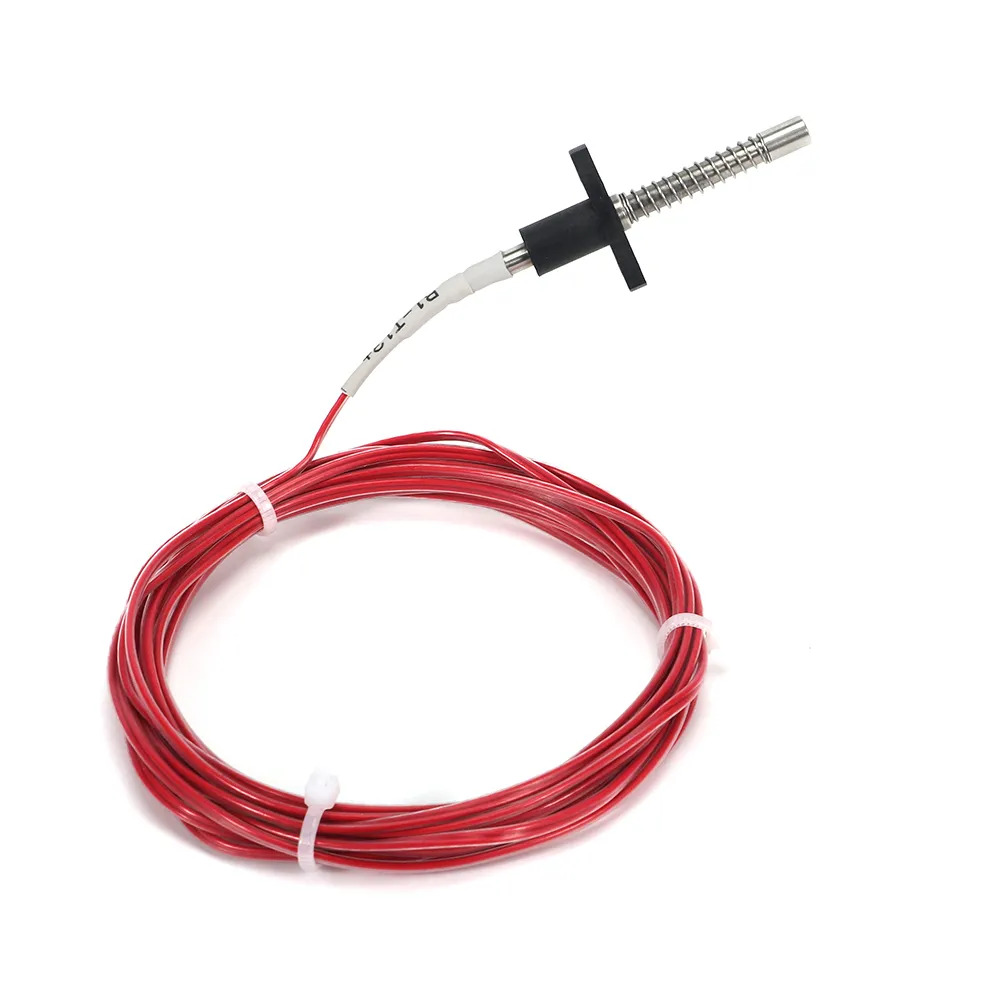
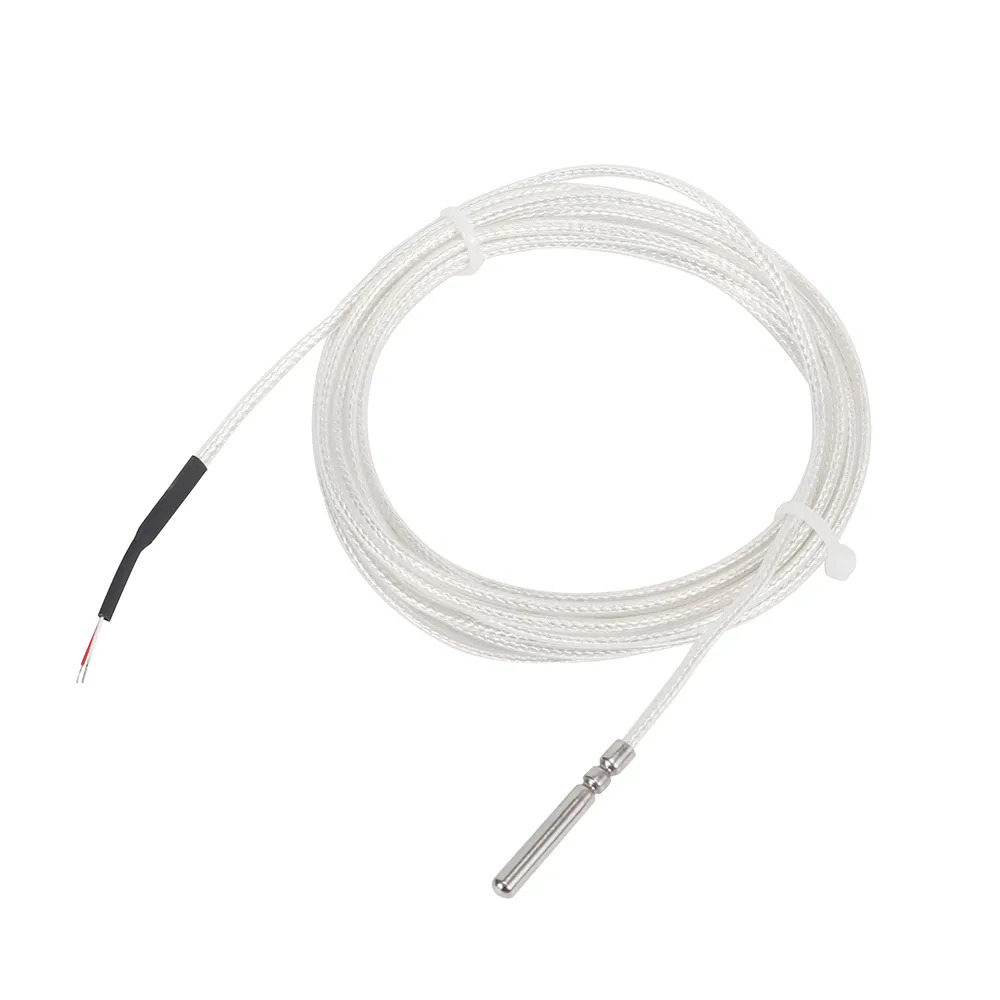
A resistance value only performs as specified once it is packaged into a probe that can survive its operating environment. Probe housing material, outer diameter, and protection against water, pressure, or vibration determine whether a PT100 or PT1000 sensor actually holds up inside a furnace, a lithium battery pack, a food thermometer, or an industrial control cabinet. Evergreen builds probes with stainless steel housings as a standard option and adjusts outer diameter, housing material, and protection level to match the equipment the sensor will live inside, turning custom temperature sensing into a question of mechanical fit rather than an abstract service promise.
Evergreen Customization Extends from TCR Curves to Cable and Connector Configuration
Beyond housing and accuracy class, a workable RTD specification includes the temperature coefficient of resistance, cable insulation type, and connector configuration, all coordinated into one buildable part rather than assembled from a generic parts list. Evergreen carries a project from prototype sampling through wholesale-volume batch production, with traceability from raw material to finished sensor, a workflow that supports repeat OEM orders without renegotiating specifications each time. That combination positions the company less as a one-time parts vendor and more as a custom PT100 RTD sensor supplier that stays engaged through the life of a product line.
Temperature Sensor Selection Also Requires a Clear NTC, PTC, and RTD Decision Boundary
RTD sensors are not the only option on the table, and a sound recommendation depends on knowing where the boundary sits. RTD sensors suit projects that need a wide temperature range, strong interchangeability between units, and long-term repeatability. NTC thermistors are often the better fit where cost sensitivity and fast response matter more than the widest possible range, and PTC devices are typically chosen for overheat protection rather than continuous measurement. Evergreen's engineering team worked through this exact comparison for a European industrial IoT sensor company that needed stable readings across a demanding temperature range, weighing accuracy, power consumption, installation method, and cost before recommending a solution. That case is evidence that the PT100-versus-PT1000 question is best answered alongside the wider sensor-technology picture rather than in isolation.
ISO-Backed Manufacturing and Traceability Support Custom Temperature Sensing
Custom RTD specifications only hold value if a manufacturer can reproduce them consistently across a full production run. Dongguan Evergreen Technology Co., Ltd. operates under ISO 9001:2015 and ISO 14001:2015 management systems, with quality control that runs from raw-material inspection through final performance testing inside a roughly 13,000-square-meter production facility. The company recently expanded that production base, adding cleanroom capacity and further automated testing and marking equipment, a step that supports steadier lead times as order volumes grow. None of that infrastructure is a separate selling point. It is the condition that lets a PT1000 or PT100 specification agreed on paper actually show up the same way in every batch that follows.
Inquiry-Based Engineering Turns RTD Requirements into a Custom Sensor Plan
The most useful first step for a buyer comparing PT100 and PT1000 options is not requesting a quote on a single part number. It is describing the application: target resistance value, accuracy class, operating temperature range, cable length, wiring configuration, probe material, installation space, and any water or vibration exposure. Evergreen uses that information to move a project toward a datasheet, a sample, and a working specification rather than a generic sales pitch, and both minimum order quantities and sample timing depend on how much customization the application requires. Framed that way, a PT1000 RTD sensor solution versus a PT100 temperature sensor stops being a guessing game and becomes an engineering conversation with a clear next step.
Quality and reliability are the cornerstones of Evergreen's operation, a standard reflected in its ISO-backed manufacturing base, its IEC 60751-referenced accuracy classes, and its willingness to walk a buyer through the PT100-versus-PT1000 decision rather than default to whichever part is easiest to ship. For companies evaluating a PT1000 RTD sensor solution, a PT100 temperature sensor, or a broader custom PT100 RTD sensor supplier relationship, Evergreen invites buyers to submit application conditions, sample requirements, and specification details through www.egn-tech.com.
Dongguan Evergreen Technology Co., Ltd.
Evergreen
+ +86-769-22286931
email us here
Visit us on social media:
LinkedIn
Facebook
Legal Disclaimer:
EIN Presswire provides this news content "as is" without warranty of any kind. We do not accept any responsibility or liability for the accuracy, content, images, videos, licenses, completeness, legality, or reliability of the information contained in this article. If you have any complaints or copyright issues related to this article, kindly contact the author above.
