
New Comprehensive Report Analyzes Risks of Nanoplastics to Human Health, Ecosystems, and the Environment
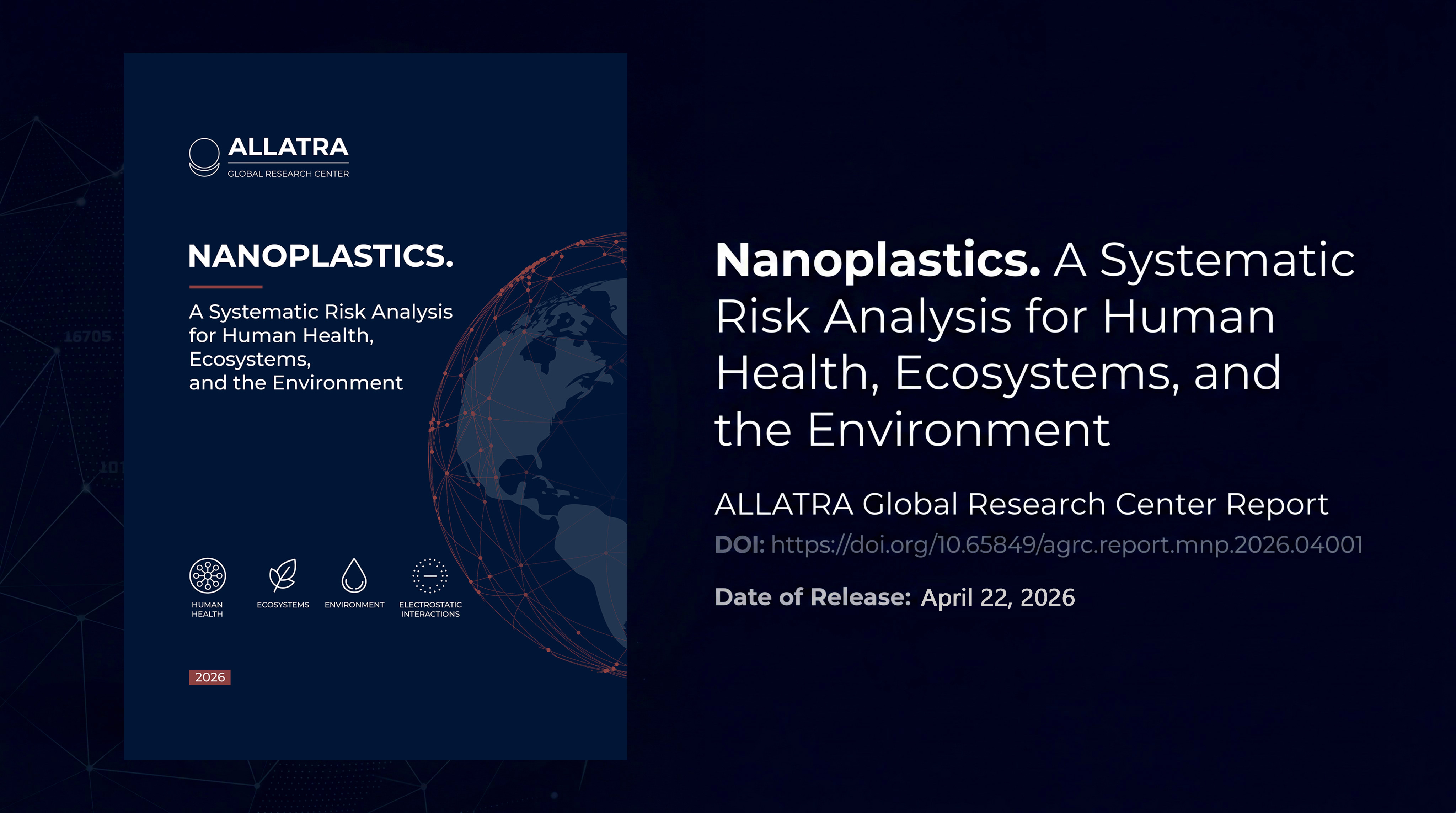
Report ALLATRA Global Research Center “Nanoplastics. A Systematic Risk Analysis for Human Health, Ecosystems, and the Environment”
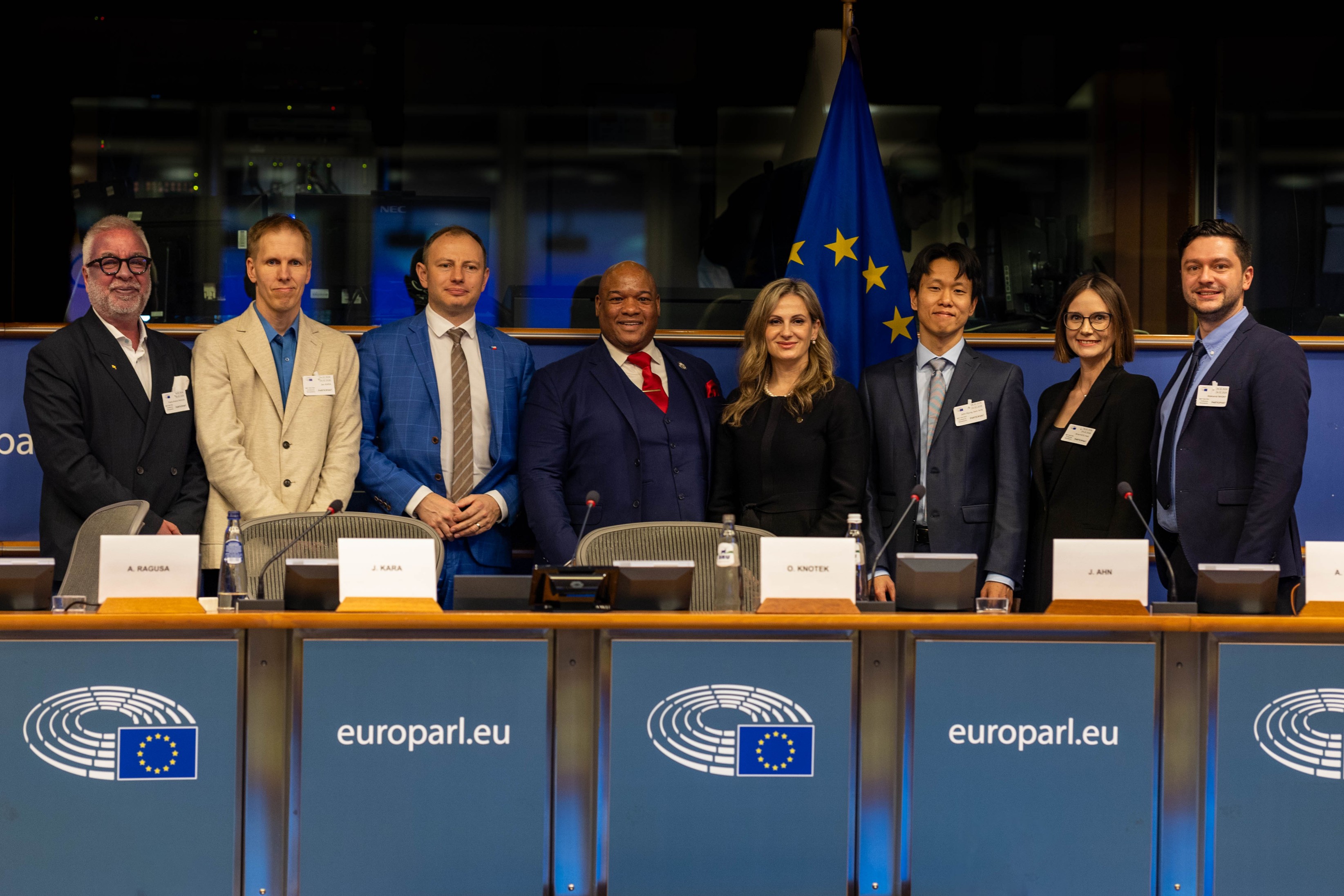
A. Ragusa, J. Kára, O. Knotek, M. Burns, M. Ovtsynova, J. Ahn, A. Kotlyar, and A. Masny at the European Parliament during the conference “NANOPLASTICS: HIDDEN CONNECTIONS AND EMERGING RISKS”, February 24, 2026
The inclusion of 592 cited sources makes this report among the most comprehensive open syntheses on this issue.
WASHINGTON, DC, UNITED STATES, April 23, 2026 /EINPresswire.com/ -- ALLATRA Global Research Center, a U.S.-based international think tank, announces the release of a new scientific and analytical report, “Nanoplastics. A Systematic Risk Analysis for Human Health, Ecosystems, and the Environment.” The work is distributed under a CC BY 4.0 license and is intended for use by the scientific community, regulatory authorities, policy institutions, and the general public. The publication has been assigned the DOI: https://doi.org/10.65849/agrc.report.mnp.2026.04001 and is available on the Center’s website.The report “Nanoplastics. A Systematic Risk Analysis for Human Health, Ecosystems, and the Environment” is unique in that it goes beyond data on the scale of plastic pollution or individual harmful effects. It helps clarify the central issue: what specifically makes nanoplastics so active in their interactions with living systems, including the human body.
The report demonstrates that the problem lies not only in the volume of plastic in the environment, but in the fact that, after breaking down into micro- and nanoscale particles, plastic effectively changes its behavior and properties. These properties enable plastic particles to interact with proteins, engage with cell membranes, tissues, and the body’s protective barriers. For this reason, the report proposes viewing nanoplastics not as passive “plastic dust,” but as a new class of anthropogenic particles with their own physicochemical activity.
What Makes Nanoplastics Hazardous to Living Systems
According to the report, when plastic transitions to micro- and nanoscale sizes, its properties change fundamentally. Its specific surface area increases, its capacity to adsorb pollutants and biomolecules rises, and the roles of surface charge, ζ-potential, and interfacial interactions become more pronounced. For example, as plastic particles shrink to the nanoscale, their specific surface area increases dramatically. Theoretical estimates indicate that a single plastic fragment approximately 1 mm in diameter, by mass, may correspond to about one trillion nanoparticles around 100 nm in size. At the same time, their total surface area increases by tens of thousands of times. This significantly enhances their reactivity and biological interaction. It is precisely this transition that makes the nanoplastics issue not only an environmental problem, but also a biophysical one.
The report emphasizes that micro- and nanoplastics are now detected not only in oceans and landfills, but also in air, soils, agricultural products, drinking water, and food. For humans, this means continuous exposure through food, water, and inhaled air. Particles of such small size are capable of interacting with epithelial barriers, cell membranes, the immune system, and intracellular structures. The report specifically highlights the ability of nanoplastics to cross complex biological barriers, including the intestinal, blood-brain, and placental barriers.
The publication places particular emphasis on mechanisms that are already supported by modern experimental and clinical data: the formation of a protein corona, oxidative stress, mitochondrial dysfunction, disruption of barrier functions, inflammatory responses, and altered interactions between particles and cells. The report also examines potential consequences for the nervous, cardiovascular, immune, reproductive, respiratory, and musculoskeletal systems, as well as risks for prenatal and postnatal development.
“The goal of this report is to establish a more precise scientific framework. This report represents an effort to consolidate fragmented scientific data into a unified map of risks and research priorities. Nanoplastics require not only measurement but also a deeper understanding of their physicochemical nature and how they interact with proteins, membranes, barriers, and ecosystems. We believe that studying the electrical properties and potential internal charge architecture of nanoplastics may become a key direction for future risk mitigation strategies,” said Dr. John Ahn, lead author of the report and a member of ALLATRA Global Research Center’s Scientific Advisory & Research Council.
The report also examines the influence of micro- and nanoplastics on ecosystems. These particles can accumulate in soils, interact with plant root systems and soil microbiota, move through food chains, and participate in processes of bioaccumulation and biomagnification. Separate sections address their influence on forest ecosystems, pollinating insects, birds, marine life, and biospheric processes.
Scientific Novelty: Why Studying the Electrical Properties of Nanoplastics May Be the Key to Understanding Them
One section of the report is devoted to the electrical properties of nanoplastics. In scientific practice, the ζ-potential is often used to describe particle behavior, a parameter associated with the charge at a particle's interface with a liquid medium. However, the report's authors pose a deeper question: Is this characteristic sufficient to fully understand the electrical nature of nanoplastics?
The report formulates a research hypothesis regarding the possible internal or subsurface electrical organization of nanoplastics. In other words, the focus is not only on surface charge, but on whether the particle itself may possess a more complex “charge architecture,” including internal charges, charge traps, dipole structures, or electret-like states.
This hypothesis is important not because it already provides a ready technological solution. Its significance lies elsewhere; it reframes the problem itself. The question is no longer only, “How can nanoplastics be detected and quantified?” It also becomes, “Can we understand why they interact with living systems the way they do, and can their biological reactivity be reduced in the future?”
For this reason, the report proposes considering charge, surface properties, and the internal electrical organization of particles as a promising direction for future research. If part of the harmful interactions of nanoplastics is determined by their electrical properties, then understanding these properties may form the basis for new approaches to risk mitigation.
Practical Conclusions and Recommendations of the Report
Among the directions for assessing and mitigating the risks of micro- and nanoplastics, the report highlights the following:
- the development of comparable international standards for measuring micro- and nanoplastics;
- the study of surface charge, ζ-potential, protein corona formation, and the electrokinetic properties of nanoparticles;
- the assessment of the long-term influence of nanoplastics on human health and ecosystems;
- the investigation of potential physical and biophysical approaches to reducing the biological activity of existing nanoplastics;
- the establishment of international research cooperation on a scale comparable to the largest scientific initiatives of the past.
The report indicates that the traditional approach to addressing plastic pollution, collection, sorting, recycling, and mechanical environmental cleanup, is insufficient to solve the problem of already formed micro- and nanofractions. Once plastic has degraded to these sizes, it becomes virtually impossible to fully remove it from the biosphere. Therefore, alongside reducing emissions and improving monitoring, new research programs are required to mitigate harmful interactions between nanoplastics and living systems.
“We believe that the issue of nanoplastics requires not a fragmented response, but an international scientific program. This is not only a matter of ecology, but also of medicine, biophysics, toxicology, climatology, and public health,” added Karolína Hronová, co-author of the report and a member of ALLATRA Global Research Center’s Scientific Advisory & Research Council.
Nanoplastics as a Topic of International Scientific Dialogue
To draw attention to the growing threat of micro- and nanoplastics as an invisible yet increasingly dangerous form of pollution that extends beyond traditional environmental and public health concerns, ALLATRA Global Research Center, with the support of Member of the European Parliament Ondřej Knotek, organized a conference on nanoplastics at the European Parliament on February 24, 2026. Speakers at the conference included representatives of ALLATRA Global Research Center from the United States, Israel, Germany, and the Czech Republic.
A. Ragusa, J. Kára, O. Knotek, M. Burns, M. Ovtsynova, J. Ahn, A. Kotlyar, and A. Masny at the European Parliament during the conference “NANOPLASTICS: HIDDEN CONNECTIONS AND EMERGING RISKS”, February 24, 2026
The report “Nanoplastics. A Systematic Risk Analysis for Human Health, Ecosystems, and the Environment” is publicly available at: https://allatra.org/global-research-center/publications/agrc.report.mnp.2026.04001 .
DOI: https://doi.org/10.65849/agrc.report.mnp.2026.04001
About ALLATRA Global Research Center
ALLATRA Global Research Center is a specialized research center conducting scientific analysis of global environmental, climate, and social processes. The Center operates under Allatra IPM USA 501(c)(3), functions on a volunteer basis, does not receive funding from foreign governments, and publishes its materials in open access for scientific institutions, regulatory bodies, the media, and the general public.
Valeria Smian
ALLATRA
valerie@allatra.org
Visit us on social media:
LinkedIn
Instagram
Facebook
Legal Disclaimer:
EIN Presswire provides this news content "as is" without warranty of any kind. We do not accept any responsibility or liability for the accuracy, content, images, videos, licenses, completeness, legality, or reliability of the information contained in this article. If you have any complaints or copyright issues related to this article, kindly contact the author above.
